



Quick Summary
RST and LTZ occupy neighboring positions in the nine-trim Silverado 1500 lineup while answering different priorities. RST layers blacked-out sport styling over the LT foundation, offers multiple cab and bed combinations, and starts with the TurboMax 2.7-liter turbocharged four-cylinder. LTZ comes as a crew cab only, opens with the 5.3-liter V8, and concentrates its content on perforated leather-appointed seating, heated and ventilated front seats, and Bose audio. Both accept the 6.2-liter V8 and the Duramax turbo-diesel, and both reach the same towing figures when configured identically, which leaves styling, cabin comfort, and body configuration as the real dividing lines.
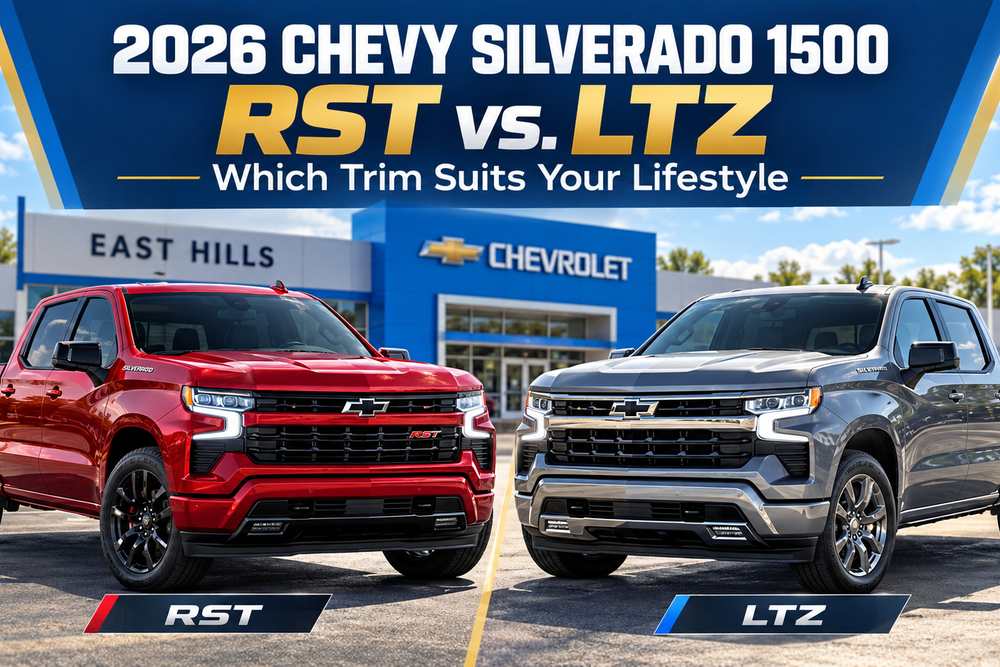
Full-size truck lineups have grown deep enough that the hardest choice often happens between two trims rather than two brands. Chevrolet builds the Silverado 1500 in nine configurations, and several of them overlap closely in price while pointing at different owners. Two names come up repeatedly once shoppers move past the work-focused trims and start looking at trucks they will drive every day. Comparing the 2026 Chevy Silverado 1500 RST vs. LTZ brings that decision into focus, since the two sit near each other on the ladder yet solve different problems. Which one fits the way you use a truck?
Where RST and LTZ Sit in the Silverado 1500 Lineup
Nine trims make up the 2026 Silverado 1500, running from Work Truck at the practical end through High Country and ZR2 at the top. Between those poles sit the volume trims most retail buyers actually shop. RST builds directly on the LT and layers a sport appearance treatment over it, keeping the same mechanical foundation while changing the visual character. LTZ climbs a step higher and concentrates its budget on the cabin, where materials and comfort features separate it from everything below.
Configuration rules shape the comparison before any feature list does. RST can be ordered in more than one cab and bed combination, which opens it to buyers who need a specific footprint for a driveway or a job site. LTZ is offered as a crew cab only, so anyone committed to a longer bed with a smaller cab has already made the decision. That single restriction settles the matter for a fair number of shoppers.
Exterior Styling Differences You Notice First
Walk up to these two trucks parked side by side and the split is immediate. RST commits to a blacked-out look, trading chrome for body-color and gloss black treatment across the grille, bumpers, and badging. Wheel designs follow the same theme, and the overall effect reads younger and more street-oriented than the rest of the lineup. Chevrolet also offers a Rally Edition package on the RST, which adds custom badging, a spray-on bedliner, and further blackout details for owners who want the theme pushed harder.
LTZ moves in the opposite direction with brightwork used deliberately rather than sparingly. Chrome accents frame the grille and trim, projector headlamps and LED lighting sharpen the front end, and the proportions read more traditional. Neither approach is objectively better, though they age differently and appeal to different tastes. Buyers who plan to keep a truck for a decade sometimes lean toward the LTZ look, while those who swap vehicles more often gravitate to the RST.
Interior Materials, Seating, Cabin Comfort
Cabin content is where LTZ justifies its position most clearly. Perforated leather-appointed seating replaces the cloth and leatherette found lower in the lineup, and heated and ventilated front seats appear along with a heated steering wheel. A Bose premium audio system comes as part of the package, and the larger center display anchors a dashboard built around comfort rather than durability alone. Second-row passengers benefit too, since crew cab dimensions combine with softer materials to make longer trips easier on everyone aboard.
RST takes a different view of what a cabin should cost. Its interior carries the LT foundation with sport-themed accents, a well-equipped infotainment setup, and seating aimed at durability. For an owner who loads tools or gear into the truck several times a week, that trade reads as an advantage rather than a compromise. Optional equipment can close much of the gap, so a specified RST reaches a comfort level that satisfies most drivers without moving up a full trim.
Powertrain Options Available on Each Trim
Standard engines mark the sharpest mechanical difference between these two trucks. RST opens with the TurboMax 2.7-liter turbocharged four-cylinder, rated at 310 horsepower and 430 lb-ft of torque. That output surprises people who assume a four-cylinder cannot anchor a full-size pickup, and the torque figure arrives low in the rev range where towing and merging demand it. LTZ starts with the 5.3-liter V8 instead, producing 355 horsepower and 383 lb-ft, which delivers power in the linear way V8 buyers expect.
Upgrade paths keep both trims flexible beyond their starting points. The 6.2-liter V8 and the 3.0-liter Duramax turbo-diesel inline-six remain available on either truck, so neither trim locks you out of the engine you want. Diesel buyers gain range and torque suited to steady highway towing, while the 6.2-liter rewards drivers who want immediate throttle response. Cost, fuel preference, and trailer weight usually settle this part of the decision faster than a spec sheet does. Sorting the engine first often makes the trim choice easier to see clearly.
Towing Numbers Worth Checking Before You Buy
Maximum ratings on a full-size pickup depend on configuration more than trim badge. Properly equipped with the Duramax turbo-diesel, the Silverado 1500 can pull up to 13,300 pounds. With the 5.3-liter V8 and the right axle ratio, that figure lands closer to 11,100 pounds. Both trims can reach those numbers, which means the RST and LTZ separate on comfort and appearance rather than raw capability. Checking the specific build in front of you always beats reading a headline number.
Hardware supporting the tow rating deserves as much attention as the rating itself. Chevrolet offers an advanced trailering system with up to eight cameras producing as many as fourteen views, which changes how a trailer feels to back into a tight spot. The Max Trailering Package adds cooling and axle components built for repeated heavy pulls. Payload also shifts with cab configuration and equipment weight, so a fully loaded crew cab carries less in the bed than a lighter build.
Matching a Trim to How You Drive
Ownership patterns tend to answer this question better than feature lists do. A contractor moving between job sites, a homeowner towing a boat on summer weekends, and a commuter who wants presence in the driveway all use the same truck differently. RST suits the driver who values appearance, flexible cab and bed choices, and a starting engine that handles daily duty without a V8 fuel bill. Its blackout styling also hides road grime better than chrome does, which counts for something in a Northeast winter.
LTZ answers a different set of priorities. Long commutes, frequent passengers, and a preference for leather and premium audio push the value toward the higher trim, especially for owners who treat the truck as a primary vehicle rather than a second one. Crew cab seating makes school runs and client trips simple, and ventilated seats earn their keep in August traffic. Test driving both back to back settles most of these questions within twenty minutes behind the wheel.
Putting the Right Silverado in Your Driveway
Trim decisions on a full-size pickup come down to honest self-assessment more than specification comparison. Both of these Silverado builds tow, haul, and hold their value well, which leaves styling, cabin content, and configuration as the real dividing lines. Once you know how often passengers ride along and how the truck spends its weekends, the right badge tends to announce itself.
At East Hills Chevrolet of Douglaston, we keep Silverado 1500 inventory on the ground at 240-02 Northern Boulevard, which lets you sit in an RST and an LTZ during the same appointment instead of guessing from a screen. Our sales team knows the cab, bed, and engine combinations well enough to narrow the field quickly. Once the truck is yours, our Certified Service Center handles everything from oil changes to trailering hardware inspections with factory-trained technicians and genuine Chevrolet parts. That support continues for as long as you own the truck.
Schedule a side-by-side test drive with our team, or call to check which Silverado configurations are on the lot this week. We are on Northern Boulevard in Douglaston, minutes from Little Neck, Bayside, and the Nassau County line.
FAQs
What is the main difference between the Silverado 1500 RST and LTZ?
RST spends its budget on appearance, layering blacked-out styling and sport details over the LT foundation while keeping multiple cab and bed choices open. LTZ puts the money inside, with perforated leather-appointed seating, heated and ventilated front seats, and Bose audio in a crew cab body. Both reach the same towing capability when configured the same way.
Can both trims be ordered with a V8 engine?
Yes. LTZ starts with the 5.3-liter V8 producing 355 horsepower, while RST opens with the TurboMax 2.7-liter turbocharged four-cylinder rated at 310 horsepower and 430 lb-ft. The 6.2-liter V8 and the 3.0-liter Duramax turbo-diesel remain available on either trim, so the engine choice stays open regardless of which badge you prefer.
How much can a 2026 Silverado 1500 tow?
Properly equipped with the Duramax turbo-diesel, the Silverado 1500 pulls up to 13,300 pounds. With the 5.3-liter V8 and the right axle ratio, that number lands closer to 11,100 pounds. Cab configuration, equipment weight, and axle choice all shift the final rating, so confirming the figure on the specific truck is worth the time.
Categories:
Blogs